Fuse: In-Situ Sensemaking Support in the Browser

Andrew Kuznetsov·Joseph Chee Chang·Nathan Hahn
UIST·2022·28 citations

TLDRFuse is introduced, a browser extension that externalizes users’ working memory by combining low-cost collection with lightweight organization of content in a compact card-based sidebar that is always available and discusses how these affordances help users externalize more of their mental model into the system.
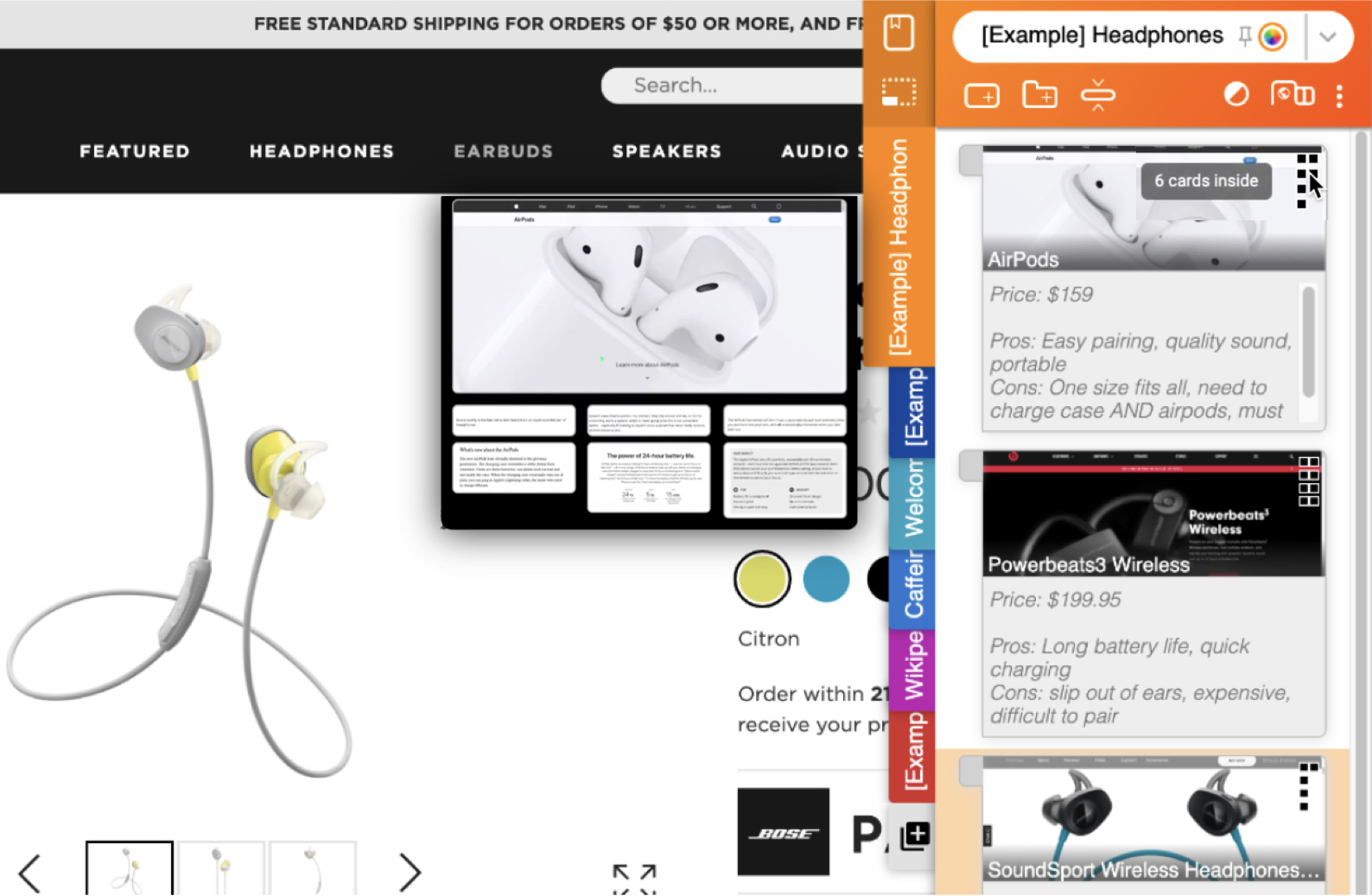
Fuse: In-Situ Sensemaking Support in the Browser

How do people cite this paper?

(generated 20 days ago)

Fuse has informed the design of subsequent sensemaking and information management tools by demonstrating the value of in-situ, browser-embedded collection and organization of web content, with its sidebar-based hierarchical structuring approach adopted or extended by systems supporting scholarly literature review and criteria-based decision-making, its card-based clipping paradigm referenced as a key design pattern for reducing cognitive costs during reading and exploration, its concept of consolidating information in one place motivating creative ideation tools, and its longitudinal public deployment methodology cited as a model for studying real-world online sensemaking behavior through instrumented browser extensions.

Loading PDF reader...

Fuse: In-Situ Sensemaking Support in the Browser

Andrew Kuznetsov·Joseph Chee Chang·Nathan Hahn
UIST·2022·28 citations

TLDRFuse is introduced, a browser extension that externalizes users’ working memory by combining low-cost collection with lightweight organization of content in a compact card-based sidebar that is always available and discusses how these affordances help users externalize more of their mental model into the system.

Fuse: In-Situ Sensemaking Support in the Browser

How do people cite this paper?

(generated 20 days ago)

Fuse has informed the design of subsequent sensemaking and information management tools by demonstrating the value of in-situ, browser-embedded collection and organization of web content, with its sidebar-based hierarchical structuring approach adopted or extended by systems supporting scholarly literature review and criteria-based decision-making, its card-based clipping paradigm referenced as a key design pattern for reducing cognitive costs during reading and exploration, its concept of consolidating information in one place motivating creative ideation tools, and its longitudinal public deployment methodology cited as a model for studying real-world online sensemaking behavior through instrumented browser extensions.

Paper

Loading PDF reader...