When the Tab Comes Due: Challenges in the Cost Structure of Browser Tab Usage
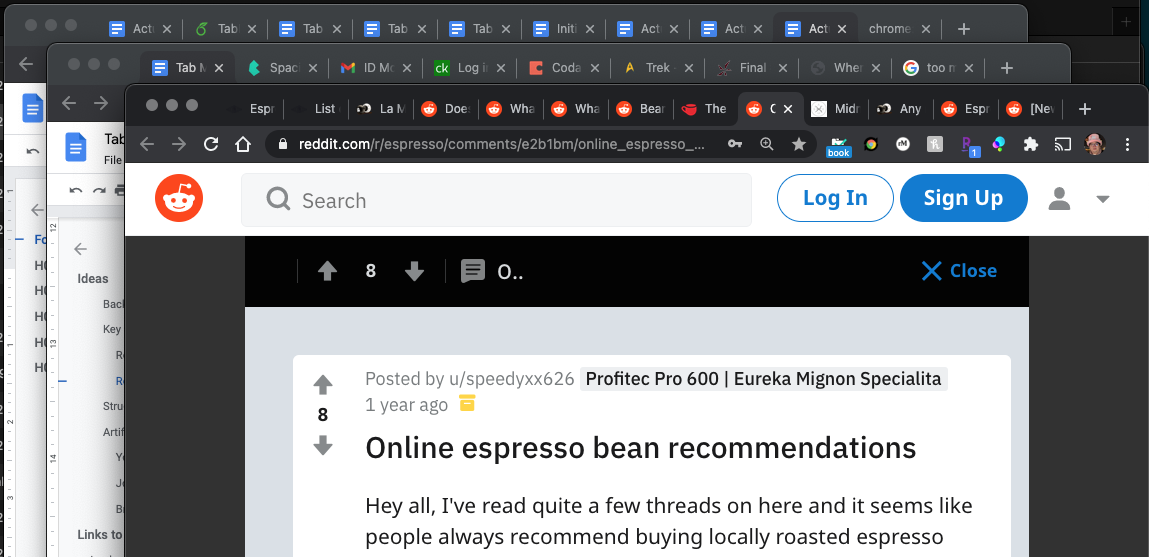
TLDRHow tabs today are overloaded with a diverse set of functionalities and issues users face when managing them is investigated and design implications for future browser interfaces that can better support managing these pressures are developed.
How do people cite this paper?
(generated 7 months ago)This paper's characterization of tab overload — including the competing pressures to keep versus close tabs, the mismatch between tabs' flat linear structure and users' task-based mental models, and the costs of re-finding closed content — has been widely adopted to motivate new browser and sensemaking interfaces that better support cross-page information tasks, to define and study the broader phenomenon of "browsing clutter", to ground the design of task-centric tab management systems, and to frame usability problems with excessive open tabs across research on information foraging, personal information management, and browser interface design.
Mentions
- Mashable: Stop trying to work in multiple browser tabs. It's terrible for your focus. Tab hoarding gives the illusion that multitasking is possible, but it's not. — Rebecca Ruiz
- Fast Company: The twisted psychology of browser tabs—and why we can't get rid of them. New research proves that it's not just you: Browser tabs are scientifically terrible. — Mark Wilson
- Metro New UK: Suffer from 'tab overload'? Scientists study why we have so many open. — Katherine Hignett
- CMU News: Overcoming Tab Overload. CMU researchers develop tool to better manage browser tabs. — Aaron Aupperlee
Talks and Demo Videos
Presentation (SIGCHI 2021)