Mesh: Scaffolding Comparison Tables for Online Decision Making

Joseph Chee Chang·Nathan Hahn·A. Kittur
UIST·2020·33 citations

TLDRMesh bridges the gap between decision support systems that typically have rigid structures and the fluid and dynamic process of exploratory search, changing the cost structure to provide increasing payoffs with greater user investment.
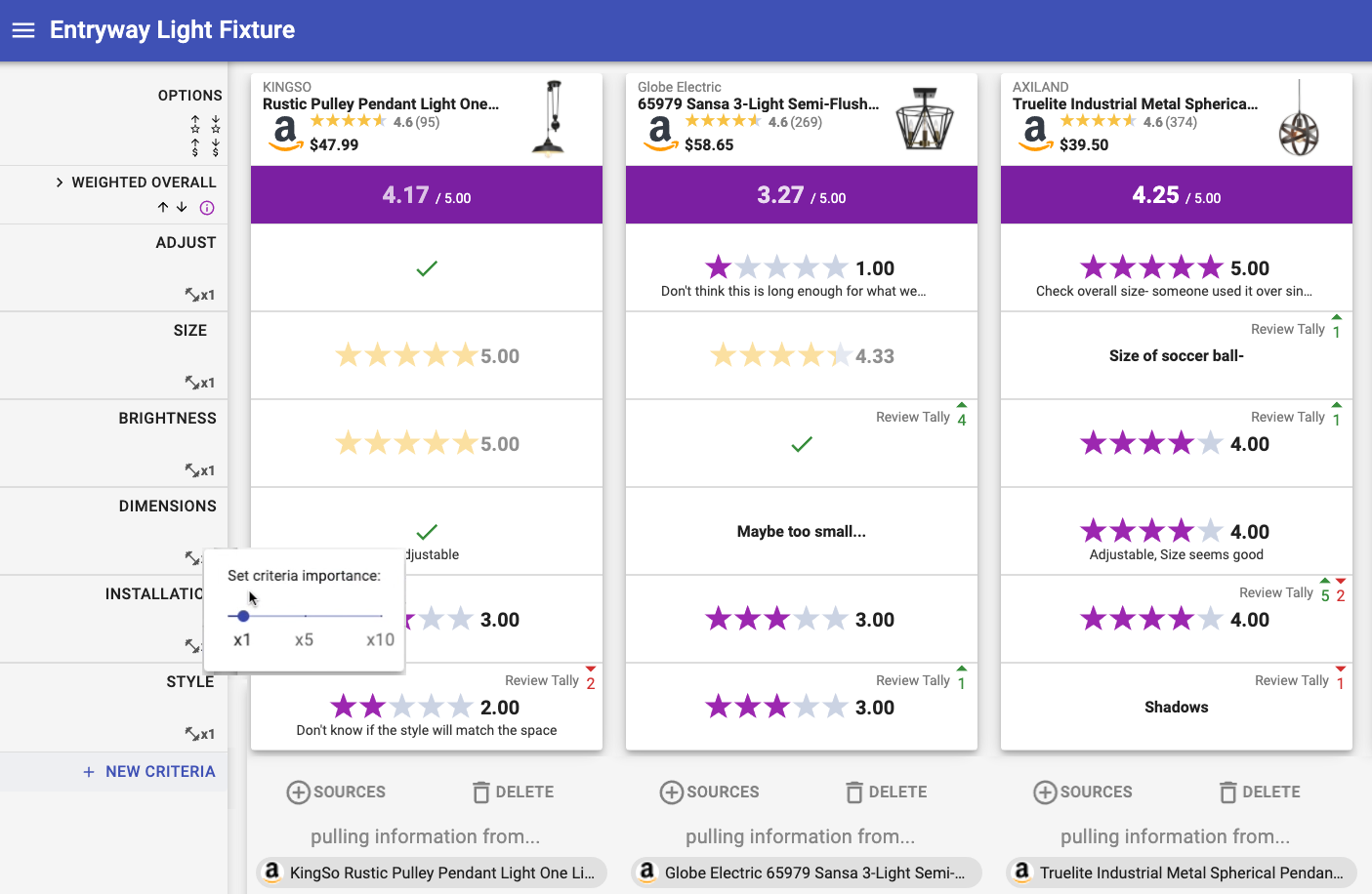
Mesh: Scaffolding Comparison Tables for Online Decision Making

How do people cite this paper?

(generated 20 days ago)

Mesh's comparison table approach for consumer decision-making has been adopted and extended by numerous subsequent systems that support iterative information gathering, organization, and synthesis across multiple sources, serving as a reference design for browser-integrated sensemaking tools that help users build structured representations like comparison tables from unstructured web content, informing standards for evaluating subjective evidence quality and valid criteria, motivating research on reducing cognitive costs of cross-source information synthesis, and inspiring adaptations to new domains including clinical decision support, spatio-temporal simulation comparison, and LLM-powered exploratory search tools.

Talks and Demo Videos

5-minute virtual conference presentation

3-minute video abstract

Loading PDF reader...

Mesh: Scaffolding Comparison Tables for Online Decision Making

Joseph Chee Chang·Nathan Hahn·A. Kittur
UIST·2020·33 citations

TLDRMesh bridges the gap between decision support systems that typically have rigid structures and the fluid and dynamic process of exploratory search, changing the cost structure to provide increasing payoffs with greater user investment.

Mesh: Scaffolding Comparison Tables for Online Decision Making

How do people cite this paper?

(generated 20 days ago)

Mesh's comparison table approach for consumer decision-making has been adopted and extended by numerous subsequent systems that support iterative information gathering, organization, and synthesis across multiple sources, serving as a reference design for browser-integrated sensemaking tools that help users build structured representations like comparison tables from unstructured web content, informing standards for evaluating subjective evidence quality and valid criteria, motivating research on reducing cognitive costs of cross-source information synthesis, and inspiring adaptations to new domains including clinical decision support, spatio-temporal simulation comparison, and LLM-powered exploratory search tools.

Talks and Demo Videos

5-minute virtual conference presentation

3-minute video abstract

Paper

Loading PDF reader...